How long to receive the civic exam pass certificate?
After the civic exam, the certificate is sent by the center or organization. Timelines may vary — per Le français des affaires, allow 24–48 business hours.
Understand France's civic exam step by step: who must take it, where to register, how many correct answers you need, and how to prepare for your goal — multi-year residence permit, resident card, or naturalization.

After the civic exam, the certificate is sent by the center or organization. Timelines may vary — per Le français des affaires, allow 24–48 business hours.

Yes, the civic exam can be retaken as many times as needed. Here is how to analyze failure and prepare another attempt without rushing.

The civic exam has no single national price: registration fees are set by the center and may vary. Here is what to expect.

On civic exam day, bring the documents requested by your center. Here is an indicative checklist — always follow your center's email or summons first.

To register for the civic exam, choose the right category, find an approved center, and follow your chosen organization's procedure. Here are the practical steps.

Algerian nationals follow a specific regime under the 1968 Franco-Algerian agreement. Verify your exact procedure before applying general CSP rules.

There is no single answer for all refugees or international protection beneficiaries. The obligation depends on the permit requested and the nature of the procedure.

A disability or health condition does not automatically exempt you from the civic exam. Depending on your situation, accommodation or a waiver from producing the pass certificate may apply.

For a first multi-year residence permit or resident card, people over 65 are generally not required to take the civic exam. Naturalization follows different rules.

The CIR, civic training, and civic exam are three distinct but often confused steps. Here is how they fit together for a CSP or resident card.

Renewing an already obtained CSP or resident card generally does not require the civic exam. Here are the rules and special cases.

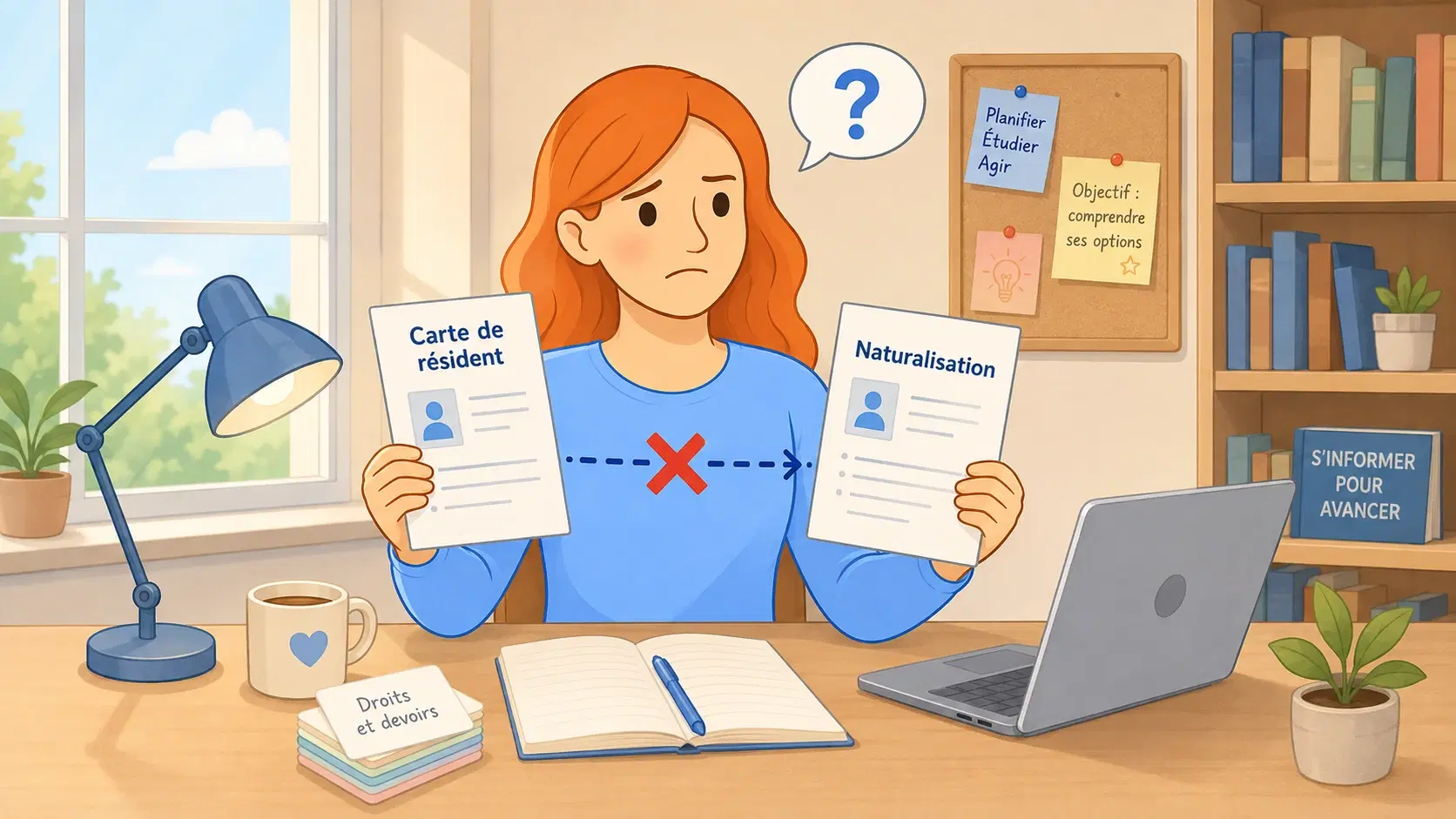
The civic exam applies to acquisition of French nationality by decree: naturalization and reinstatement. Declaration procedures are not affected.

For certain first resident card applications, the civic exam is required. Here are the conditions, test format, and steps to prepare.

The civic exam applies to first applications for a multi-year residence permit, with exceptions. Here is how to know if you are affected and how to prepare.

Stress, poor preparation, or reading too fast: here are the most common mistakes before and during the civic exam, and how to avoid them.

Five themes structure the civic exam. Here is what they cover and how to revise them effectively, theme by theme.

A mock exam reproduces the official format to measure your level before exam day. Here is how to use it wisely, without unnecessary stress.

32 correct answers out of 40: here is the official pass threshold for the civic exam, how to calculate your score, and why to aim for a safety margin.

A simple method to prepare for the 2026 civic exam: understand the official format, revise the 5 themes, practice with quizzes, and validate your level with mock exams.

The civic exam is taken at an approved center, not at home and not at the prefecture. Here is how to find a CCIP or FEI center and register.

The civic exam does not apply to every procedure. Here is who is not affected, who is not required to take the test, and when a waiver or accommodation may apply.

Since January 1, 2026, the civic exam is required for first applications for multi-year and resident permits by non-EU nationals, as well as for naturalization and reinstatement in French nationality by decree.